
On Thursday March 30th, members of the ArcticNet team attended the one-day research symposium on Arctic Biodiversity and Change hosted by the Canadian Museum of Nature (CMN) in Ottawa, ON. Dr. Amanda Savoie, the organizer of the event and the Director of The Centre for Arctic Knowledge and Exploration at the CMN says this theme was chosen to “highlight the importance of biodiversity in the Arctic, but also to highlight the fact that the changing climate is having an impact on biodiversity. We wanted to highlight the museum and ArcticNet’s expertise in biodiversity research, while also including talks from researchers who are studying the ways in which the climate is changing”. 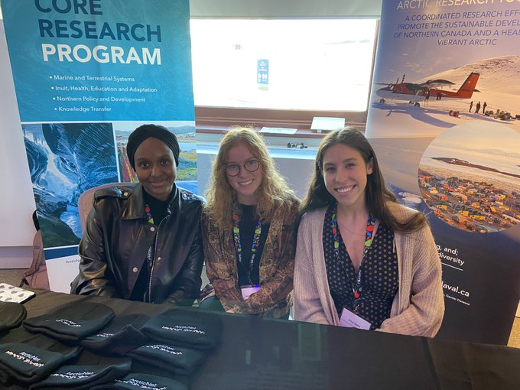 Through exceptional sessions, keynote speakers and posters, the day comprised of valuable knowledge sharing and relationship building which ultimately made the symposium successful in shining a light on changes in biodiversity in a transforming Arctic.
The first keynote speaker and ArcticNet project member, Dr. Emily Choy, spoke about Arctic seabirds as sentinels of climate change and marine ecosystem health. In addition to the valuable cultural ecosystem services provided by seabirds, they are also indicators of contaminant exposure in marine ecosystems making them an ideal study species. Despite being far removed from largely industrialized areas, traces of anthropogenic pollution are carried to the Arctic and present a threat to human health and the environment. Thus, understanding how pollutants affect ecosystems in a transforming Arctic is essential.
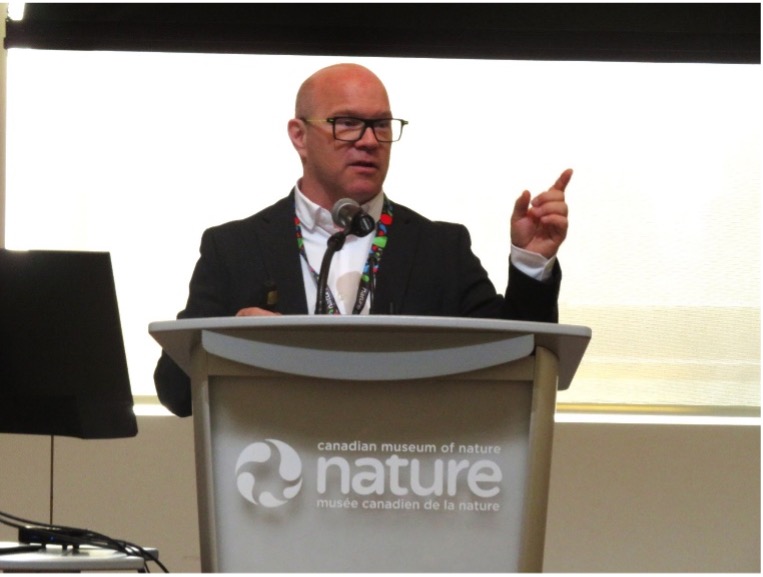 ArcticNetCo-Scientific Director, Dr. Phil Archambault, was another keynote speaker at the symposium. His talk focused on benthic ecosystems in the Arctic and the potential effects of sea ice melt on food webs within them. The take home message from his talk was that marine biodiversity in the Arctic is higher than expected but ecosystem dynamics are changing with decreasing sea ice. In the face of longer ice-free periods, it is critical to investigate the potential shifts in marine food webs as the systems are heavily relied upon by Northerners.
In addition to these keynote speakers, other presentations covered topics such as climate change in the fossil record, plant flowering times, and underwater kelp forests. The latter of which is an especially important topic to Amanda. However, unlike Amanda, who has extensively explored the underwater world of the Arctic Ocean, most of the public perceive the Arctic as a mysterious, pristine, unattainable place. While the vast land of ice and ocean is indeed mysterious, it is critical for researchers and the public to be aware of the climate risks in the Arctic and the efforts underway to understand and limit these risks.
“I think it’s important for the Arctic research community to get together and share their research, data, and future plans. There are all kinds of connections that can be made by learning what your colleagues are up to, and making these links between projects is so important for building collaborations and strengthening your research. Sometimes you learn something new that can send your study in a whole new direction! It is also very important that we share our work with the public. As the Arctic warms due to climate change, we have a responsibility to share what we are learning, especially with those who live in the North.” – Dr. Amanda Savoie
Events such as this symposium provide an opportunity for just this. Indeed, by organizing events centered around Arctic research and exploration, we allow the public to familiarize themselves with the so-called mysterious environment that occupies 40% of Canada’s territory. ArcticNet was thrilled to sponsor and collaborate with the CMN on the symposium and hopes to continue supporting future engaging initiatives.
Author: Julia Macpherson, Science Communications Coordinator